

Table of Contents
If you are reading this, you likely know the feeling: a sharp, burning shock that starts in your lower back, travels through your buttock, and shoots down your leg—sometimes all the way to your toes. It feels like an electric cable is being pinched inside your body.
This is Sciatica. And if you have been told to “just rest and take painkillers,” you probably already know that advice rarely works for long.
At Apollo Medical Centre, we see hundreds of patients who believe their only options are living in pain or undergoing major spine surgery. I am here to tell you there is a middle path—one that is safer, faster, and highly effective.
In this guide, we will move beyond the basic advice and explore Interventional Pain Management—the medical science of treating sciatica at its root without a scalpel.
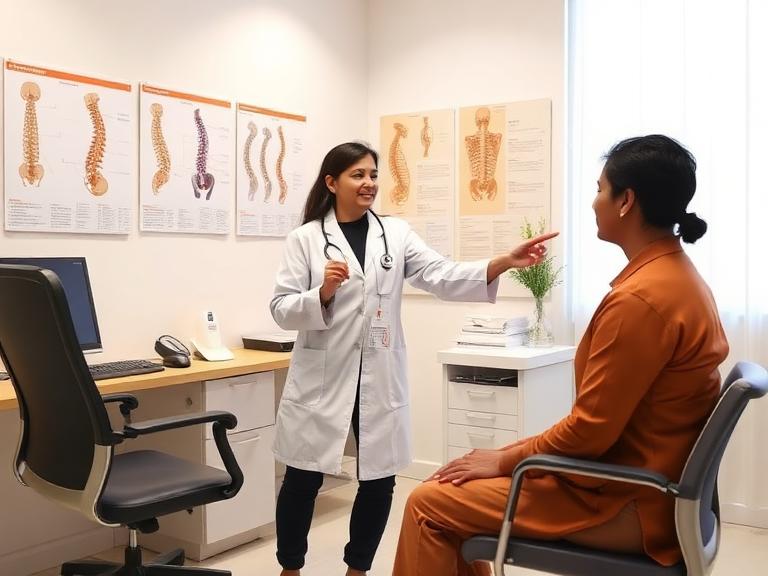
Sciatica is not a disease; it is a symptom. It tells us that the Sciatic Nerve—the longest and widest nerve in the human body—is being compressed or irritated.
The sciatic nerve is formed by nerve roots exiting your spine at levels L4, L5, and S1. When a disc herniates (slips) or a bone spur grows, it pinches these roots.
- L4 Nerve Pain: Often felt in the thigh and knee.
- L5 Nerve Pain: Radiates down the side of the leg to the big toe.
- S1 Nerve Pain: Travels down the back of the calf to the heel/little toe.
Dr. Purohithi’s Diagnostic Tip:
“If lifting your leg while lying down reproduces the shooting pain (Positive Straight Leg Raise Test), it is a classic sign of nerve root compression. An MRI confirms the location, but your symptoms tell the story.”
Many general physicians prescribe NSAIDs (painkillers) and bed rest. While this helps mild cases, it often fails for true nerve compression because:
- Chemical Inflammation: A torn disc leaks acidic chemicals onto the nerve. Oral pills cannot neutralize this concentrated acid deep in your spine.
- Mechanical Pressure: No amount of painkillers can physically remove the pressure of a disc pressing on a nerve.
- The “Use It or Lose It” Trap: Excessive bed rest weakens your core muscles, which actually destabilizes your spine further.
The Solution? We must deliver powerful anti-inflammatory medication directly to the site of the injury.
At Apollo Medical Centre, we use Interventional Pain Management. These are precise, minimally invasive procedures designed to shrink inflammation and “reset” the nerve.
The “Smart Bomb” for Sciatica.
Unlike a regular “butt shot” that spreads medicine everywhere, a TFESI targets the specific millimeter-wide opening (foramen) where the irritated nerve exits the spine.
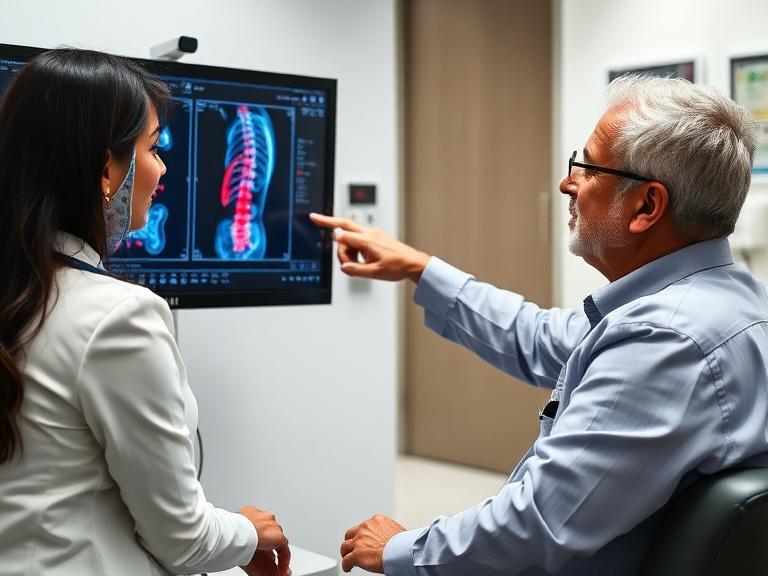
- How it Works: Using C-Arm Fluoroscopy (live X-ray), we guide a hair-thin needle right next to the inflamed nerve root. We then inject a potent anti-inflammatory steroid and a numbing agent.
- The Result: It washes away the inflammatory chemicals and reduces swelling immediately.
- Success Rate: Clinical studies show a 75-80% success rate in relieving radicular pain, often preventing the need for surgery.
Sometimes, an MRI shows multiple disc bulges, but we need to know which one is causing the pain.
- The Procedure: We numb a specific nerve root.
- The Logic: If your pain vanishes instantly, we have found the culprit. This is both a treatment and a definitive diagnosis.
Not all sciatica comes from the spine. In about 15% of cases, the sciatic nerve is pinched by a tight muscle in the buttocks called the Piriformis.
- The Treatment: Dr. Purohithi uses Ultrasound Guidance to inject a muscle relaxant directly into the piriformis muscle, instantly releasing the grip on the nerve.

If a doctor offers you an injection in their office without imaging guidance, say no.
The spine is a complex highway of nerves and blood vessels. Injecting “blindly” (by feeling landmarks) risks hitting a blood vessel or missing the target entirely.
The Apollo Standard:
- C-Arm Fluoroscopy: We use real-time X-ray video to navigate the spine. We confirm the needle position with a contrast dye before injecting any medication.
- Ultrasound Guidance: For soft tissue procedures, we visualize the nerve in 4K resolution.
Dr. Purohithi’s Promise:
“I do not guess with your spine. Every procedure I perform utilizes advanced imaging to ensure safety and precision. If I can’t see the target, I don’t inject.”
Many patients fear that “spine surgery” is inevitable. The truth is, only 5-10% of sciatica patients actually need surgery.
| Feature | Spine Surgery (Discectomy) | Interventional Pain Management (TFESI) |
| Invasiveness | High (Cutting muscle/bone) | Minimally Invasive (Needle only) |
| Anesthesia | General (Unconscious) | Local (Awake & Comfortable) |
| Recovery | 6 weeks to 3 months | 24 hours |
| Risks | Infection, Scar Tissue, Failure | Minimal (Safe & Controlled) |
| Cost | High | Affordable |
When IS surgery needed?
We only recommend surgery if you have “Red Flag” symptoms: loss of bladder/bowel control, or progressive weakness (foot drop). For everyone else, non-surgical intervention is the first and best choice.
Mr. Rao’s Journey (45, IT Professional)
- The Problem: Severe left leg pain for 4 months. Couldn’t sit for more than 10 minutes. MRI showed an L5-S1 disc herniation. Surgeons recommended fusion.
- The Apollo Solution: Mr. Rao consulted Dr. Purohithi. She performed a single L5 Transforaminal Epidural Injection.
- The Outcome: “The shooting pain stopped within 24 hours. I started physiotherapy the next week. It’s been a year, and I am back to playing badminton.”
Q: How long does the relief from a sciatica injection last?
A: It varies. Some patients get permanent relief from a single injection because the inflammation cycle is broken, allowing the body to heal the disc naturally. Others may need a repeat procedure after 3-6 months. The goal is to provide a “pain-free window” for you to do physiotherapy.
Q: Is the procedure painful?
A: No. We use local anesthesia to numb the skin. You might feel a momentary pressure or a “reproduction” of your sciatica symptoms for a few seconds as the medicine reaches the nerve—this is actually a good sign that we are in the right spot!
Q: Can I walk immediately after the treatment?
A: Yes. We monitor you for about 45 minutes, and then you can walk out. We recommend resting for the remainder of the day and returning to light work the next day.
Q: Why choose Dr. Purohithi for sciatica treatment?
A: Dr. Purohithi is a fellowship-trained Pain Management Specialist with a background in Anesthesiology. Her deep understanding of nerve pharmacology and safe injection techniques ensures you get the most effective relief with the highest safety standards.
You do not have to live with sciatica. The burning, the electric shocks, the inability to sit—these are treatable problems.
If “rest and pills” haven’t worked, it’s time for a specialist approach.
Don’t mask the pain. Treat the source.
Book Your Assessment at Apollo Medical Centre
- Specialist: Dr. P. Purohithi
- Location: Kondapur, Hyderabad
- Condition Treated: Sciatica, Slip Disc, Leg Pain
