
Table of Contents
Parenting in 2025 looks nothing like it did a decade ago. Between demanding jobs, hybrid work schedules, and the ever-blurring line between personal and professional life, British parents are finding themselves juggling more than ever before. Amid this chaos, a new wave of AI-powered parenting apps in the UK has quietly stepped in — reshaping how families organize, connect, and care.
But how real is the impact? Do these apps truly make life easier, or are they just another digital distraction? To find out, we dived deep into real stories from parents across the UK — from London and Manchester to Glasgow and Birmingham — who have embraced AI parenting tools as part of their daily rhythm.

For Sarah and Ben from Manchester, mornings used to be a whirlwind of school uniforms, misplaced keys, and missed breakfasts. But since installing a parenting app last summer, their mornings have transformed.
“The app syncs our family calendar, suggests morning routines, even predicts traffic patterns for school drop-offs,” says Sarah. “It sounds futuristic, but it’s like having an invisible helper who just knows what’s next.”
AI algorithms inside many UK parenting apps use predictive analytics and context-aware reminders to anticipate what families need. For example, if your child has a soccer match and the weather turns rainy, the app sends a timely reminder to pack a raincoat.
This blend of smart automation and real-life adaptability is changing how British families approach daily planning — turning routine chaos into manageable, predictable patterns.
Remote work has become a staple for many parents in the UK, and with it comes the challenge of balancing professional deadlines with family time.
Tom, a freelance graphic designer from Leeds, admits that before using an AI parenting app, his biggest stress was keeping track of his daughter’s developmental milestones.
“The app gives gentle nudges — like reminding me to schedule playtime or log milestones like first words or new foods,” Tom says. “It’s not intrusive, just supportive.”
Behind the scenes, natural language processing (NLP) systems analyze a parent’s input to provide emotionally intelligent suggestions, helping them feel less overwhelmed. These micro-interactions reduce parental guilt and promote mental well-being, especially for working parents managing multiple responsibilities.

The new generation of AI parenting apps in the UK goes beyond tracking — they listen.
Unlike the early apps that only focused on feeding times and sleep patterns, the 2025 AI tools now understand tone, mood, and sentiment. Through text or voice entries, they can detect when a parent sounds stressed, tired, or anxious — and gently suggest calming activities, positive affirmations, or community resources.
Emily, a single mother in Bristol, recalls:
“I once logged that I was exhausted and worried about my son’s school behavior. The app immediately suggested articles about emotional regulation and even connected me with a parent support group nearby.”
These emotional touchpoints create a sense of connection between the technology and its user — redefining what “support” means in the digital age of parenting.
Co-parenting dynamics in the UK have also evolved. Modern families often include blended homes, shared custody, and dual-income parents.
Apps now feature shared dashboards — allowing both parents to stay informed about routines, health updates, and milestones.
“Even after our divorce, we communicate better now,” says James from Liverpool. “We both use the same parenting app to share updates about our son — homework, medical checkups, or even playdates. It keeps us aligned without arguments.”
This digital co-parenting model promotes transparency and collaboration, replacing emotional friction with data-driven coordination.

Mental load — the invisible labor of remembering every little detail — has long burdened mothers disproportionately. But in 2025, this narrative is shifting.
Many AI-powered apps are designed to offload cognitive tasks. From tracking immunization schedules to grocery lists for toddlers, these apps remind, record, and re-prioritize tasks intelligently.
“It’s like having a second brain,” laughs Priya from London. “I finally stopped carrying all the mental to-do lists in my head.”
This shift isn’t just about convenience. It’s about equality. By redistributing the invisible workload between partners, parenting apps are subtly rebalancing gender roles in households — one notification at a time.
Unlike generic baby trackers of the past, today’s UK parenting apps integrate AI-driven personalization. The software learns about each child’s unique growth rate, emotional needs, and preferences.
For instance, the app might notice that your toddler learns best through visuals and will suggest picture-based learning games. Or, if your teen shows signs of stress during exams, it may offer breathing exercises or music therapy playlists.
These insights aren’t random — they stem from vast datasets and behavioral modeling that make AI feel human in its recommendations.
British parents remain highly cautious about digital safety — and rightly so.
Most top-rated parenting apps in the UK now use GDPR-compliant encryption and on-device AI processing to ensure personal data never leaves the phone.
“I was skeptical about logging my child’s data,” says Hannah, a parent from Glasgow. “But knowing that my data isn’t stored on external servers made all the difference.”
With privacy as a core feature, these apps are regaining trust among modern, tech-savvy parents.
Child psychologists and pediatricians across the UK are beginning to acknowledge the benefits of AI-assisted parenting — particularly in supporting mental health, time management, and emotional literacy.
Dr. Rachel Morton, a child development expert in London, explains:
“AI isn’t replacing parents; it’s reinforcing them. The best apps today act like behavioral mirrors — helping parents become more aware, responsive, and organized.”
This expert validation strengthens the credibility and adoption of AI parenting tools in everyday family life.
One of the most celebrated features of modern parenting apps is the community hub — a safe space where UK parents can connect, share stories, and learn.
The organic, peer-to-peer learning that occurs within these spaces fosters empathy and shared understanding, helping parents realize they’re not alone in their struggles.
“When I see another parent posting about bedtime struggles or picky eating, it feels comforting,” shares Emma from Nottingham. “It’s like a digital village.”
This sense of belonging reinforces the “it takes a village” concept — digitized for the modern parent.
The next leap in parenting technology is predictive AI — where apps will pre-empt needs based on behavioral patterns, biometric data, and contextual cues.
Imagine your app reminding you to hydrate your child more often during heatwaves or suggesting creative indoor play activities during exam stress periods.
By 2027, experts predict parenting apps will merge with wearable devices to track not only children’s habits but emotional well-being — creating a holistic ecosystem of family care.
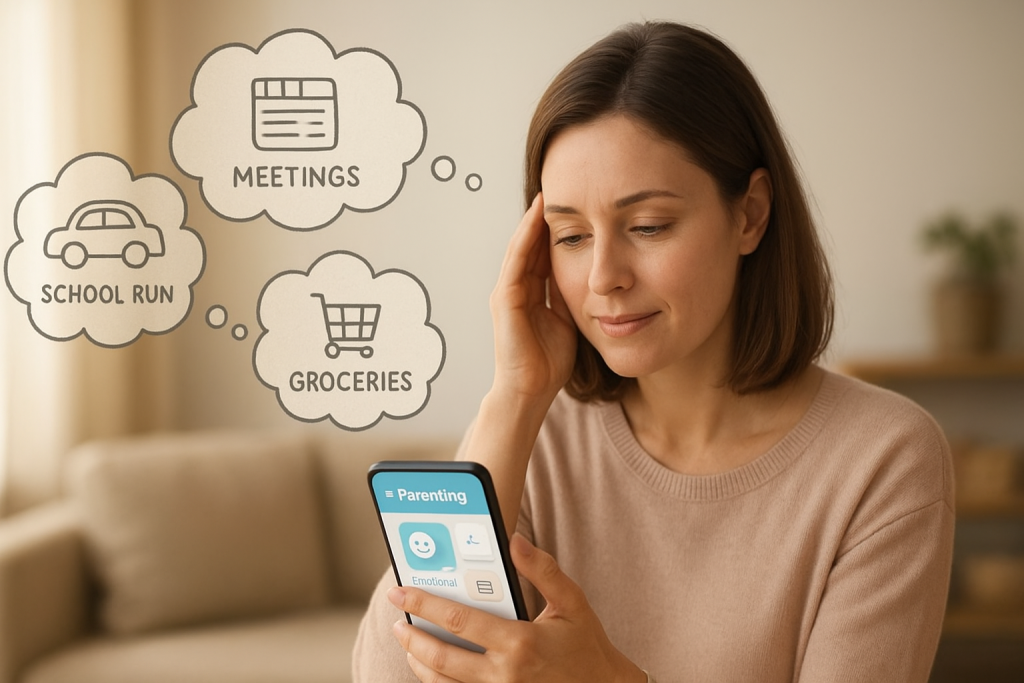
The evolution of parenting apps in the UK shows a fascinating blend of empathy, data, and design. From morning routines to emotional support, these apps are not about replacing the parent — they’re about reinforcing them.
In a world where time is limited and pressure is endless, AI is quietly restoring balance, empathy, and connection within modern UK households.
“Parenting feels lighter now,” says Sarah. “It’s not that the challenges disappeared — it’s just that I finally have help that understands.”
